Taygetus Mountain Winter Ascent

Taygetus, is a mountain range in the Peloponnese peninsula in Southern Greece. The highest mountain of the range is Mount Taygetus, also known as the “Profitis Ilias”, or “Prophet Elias”. The name is one of the oldest recorded in Europe, appearing in the Odyssey. In classical mythology, it was associated with the nymph Taygete. During Byzantine times and up until the 19th century, the mountain was also known as Pentadaktylos.

The Taygetus Massif is about 100 km (62 mi) long, extending from the center of the Peloponnese to Cape Matapan, its southernmost extremity. It contains the tallest mountain in the Peloponnese, the Profitis Ilias summit, reaching 2,407 m (7,887 ft); this is probably the classical Mount Taléton mentioned by Pausanias.The summit is an ultra prominent peak.
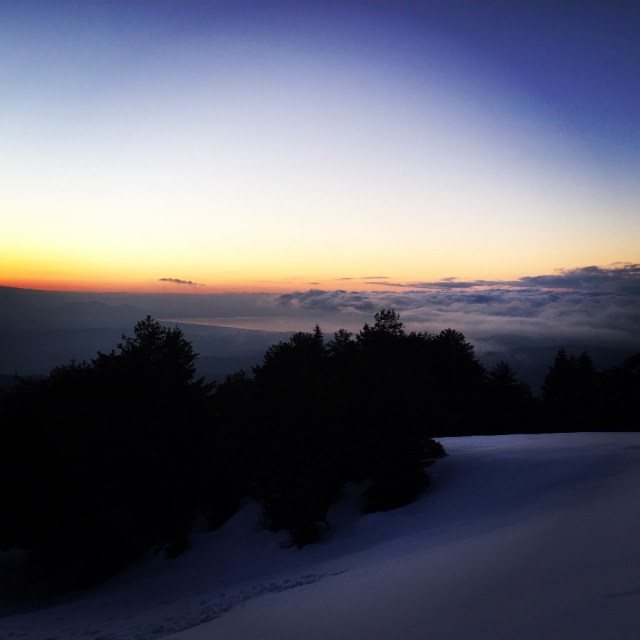
taygetos_mountain_2017_01

Continue reading “Taygetus Mountain Winter Ascent” →

Winter Ascent on Mount Oligyrtos

Oligyrtos is a mountain located at the junction of Arcadia, Corinthia and Argolis in the northeastern Peloponnese in Greece. The mountain diagonally stretches from southwest to northeast, with about 35 km length and 15 to 20 km breadth. Its highest point is the peak Skipiza, at 1,935 m elevation. Other peaks are Gkrimini (1,831 m), Parnias (1,800 m), Skiathis (1,777 m) and Mavrovouni (1,695 m).

oligyrtos_mountain_01
Beginning of the route from Lafka Village

Continue reading “Winter Ascent on Mount Oligyrtos” →

Winter Ascent on Mount Mainalo

The Mainalo, named after the mythical Maenalus, son of Lycaon, is a mountain range that spans about 15 to 20 km from north to south (southwest of Tripoli to northeast of Vytina) and from east to west from 5 to 10 km (from Zygovisti to Kapsas).

The mountaintop which is also known as Ostrakia elevates at 1,860 m is in the northwest central part. Mainalo is also the tallest mountain in Arcadia. The highest mountaintop is named Profiti Ilia and the height is 1.981 meters above sea level. The entire area is also a parkland.

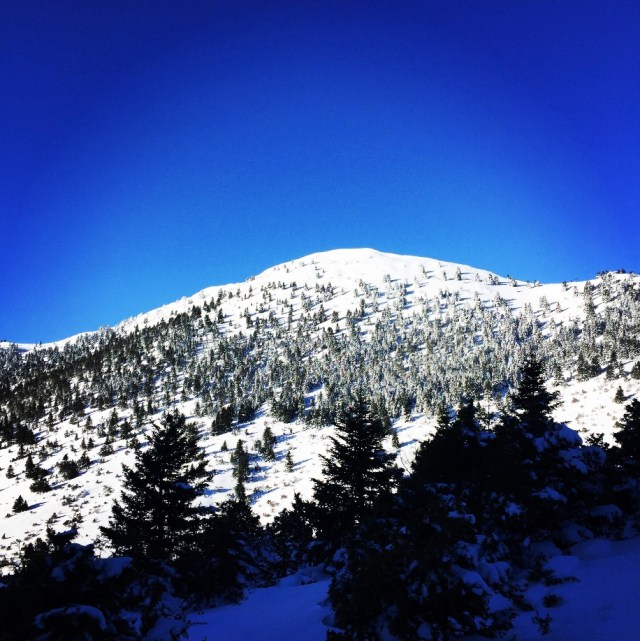
mainalo_mountain_02
Trees, Snow and blue Sky

Continue reading “Winter Ascent on Mount Mainalo” →

Winter Ascent on Mount Kaliakouda

Mount Kaliakouda is like a twin to Chelidona; seperated only by Karpenisiotis river, the two are of almost equal height. An ideal destination for adventure-seekers, it stands out for the wildness of its nature and thanks to its contiguity with other mountains, it may serve as a base for several days of exploration.

kaliakouda_10

Continue reading “Winter Ascent on Mount Kaliakouda” →

Winter Ascent on Mount Tymfristos (Velouchi)

Mount Timfristos or Velouchi, located between Evritania and Phthiotis prefectures, belongs to the Pindus mountain range and is connected to Agrafa. From its peak you can see the mountains of central Greece, with Vardousia and Kaliakouda to the south and Panetoliko and Chelidona to the southwest. About 50% of Evritania is dominated by forests- a higher percentage than any other greek perfecture-, consisting mostly of firs and some deciduous species on lower grounds.

mount_velouchi_17

Continue reading “Winter Ascent on Mount Tymfristos (Velouchi)” →

Mount Varnoudas Expedition Preparation – Winter 2017

An impressive mountain range at the edge of Greece, which is distinguished for its rich forests, the variety of streams and the large alpine meadows, which host a affluent in endemic and rare species flora.

Varnoudas or Varnous, is spread at northwest of Florina’s prefecture, in the border with FYROM. The mountain constitutes the south endpoint of the larger mountain range of Peristeri (Pelister or Mpampa in Slavic language), which its main volume is situated insider the neighboring country. West of the mountain, are the Prespes Lakes, with the slopes of Varnoudas offering unique view to the basin that is created by the two lakes. At North, the mountain is connected with the rest of Pelister, at east, the foot of the mountain end up to Florina’s plateau and at south, is divided from Mount Vernon, by Vigla’s neck.

Continue reading “Mount Varnoudas Expedition Preparation – Winter 2017” →

Olympus Mountain Autumn Ascent

Time has come for the Autumn ascent. After the initial planning, it was that time of the year to visit again the Mountain of the Greek mountains, Olympus.

Olympus is the highest mountain in Greece and the second highest mountain in the Balkans. It is located in the Olympus Range on the border between Thessaly and Macedonia, between the regional units of Pieria and Larissa, about 80 km (50 mi) southwest from Thessaloniki. Mount Olympus has 52 peaks, deep gorges, and exceptional biodiversity. The highest peak Mytikas, meaning “nose”, rises to 2,918 metres (9,573 ft). It is one of the highest peaks in Europe in terms of topographic prominence.

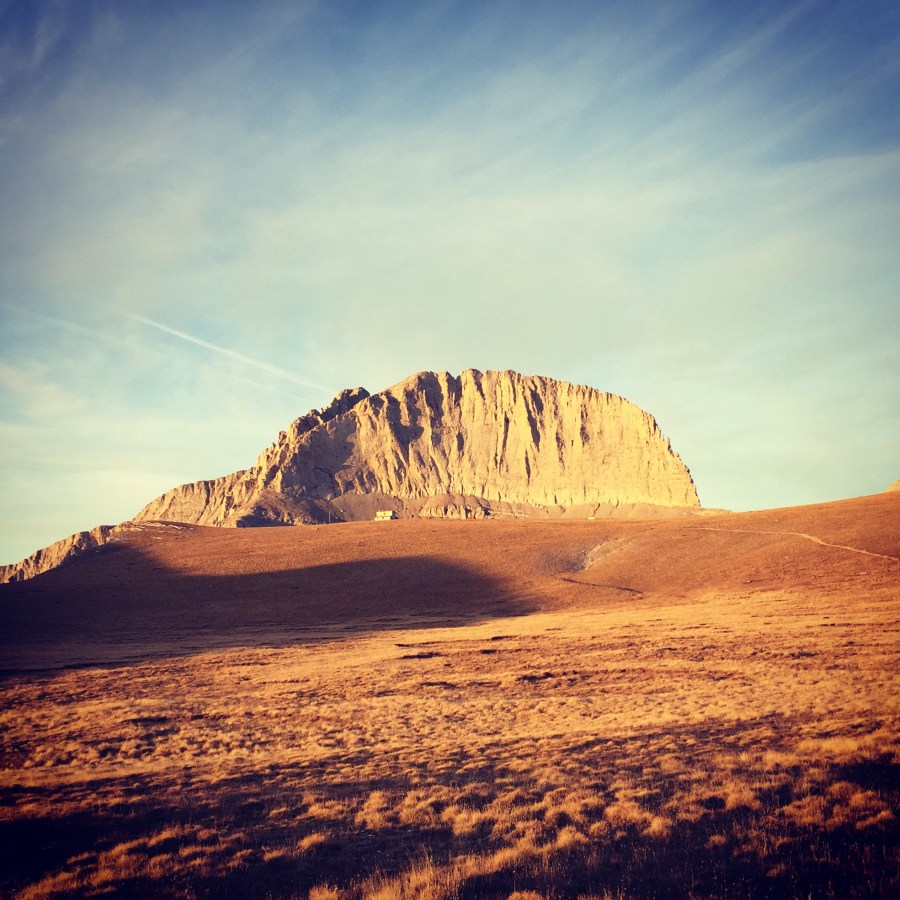
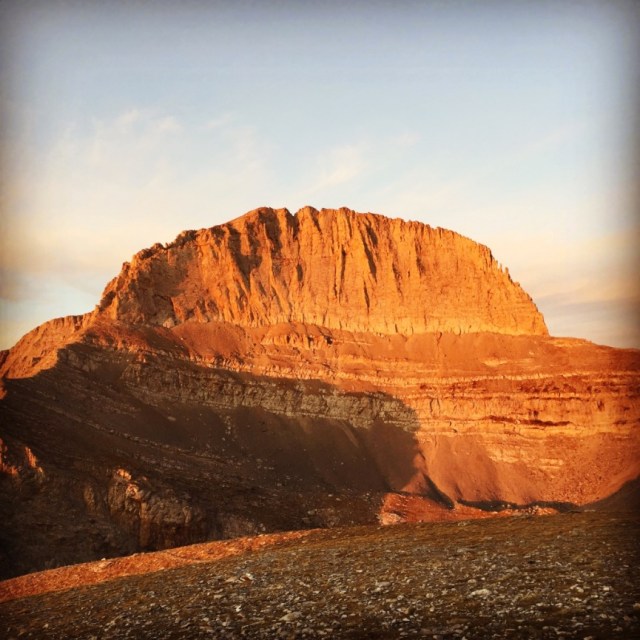
olympous_2016_52
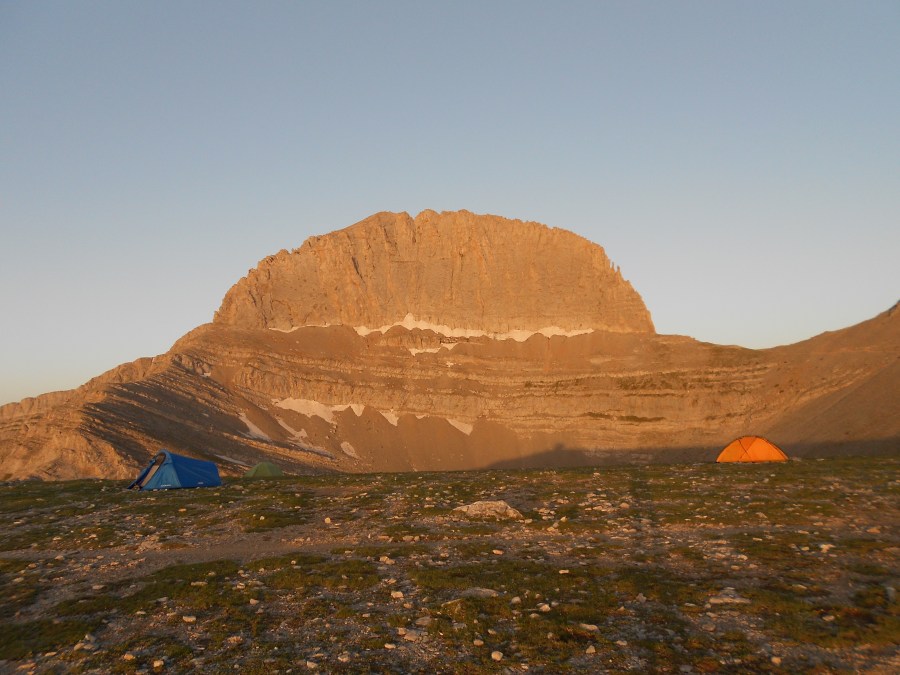
Throne of Zeus (Stefani)

Olympus was notable in Greek mythology as the home of the Greek gods, on the Mytikas peak. Mount Olympus is also noted for its very rich flora with several species. It has been a National Park, the first in Greece, since 1938. It is also a World’s Biosphere Reserve.

Continue reading “Olympus Mountain Autumn Ascent” →

The Ultimate Guide of Hiking and Mountaineering in Greece

You can explore Greece’s variety of landscapes, remote coves and the ruins of ancient cities, walking!

The core of Mainland Greece runs from the European Long Distance Walking Path Ε4 (- GR), beginning from the Pyrinaia it arrives in Greece via Yugoslavia, at the Nikis guard-post in Florina. The E4, crossing the Peloponnese, stops at Gythio and continues on to Crete. The mountain-climber is thus given the opportunity to see the enjoy of the Greek scenery and the wealth of Greek nature.

The highest elevation along the total route is the peak of Olympus Skolio (2,911 m). Highest peak of Greece is Mt.Olympus Mytikas at 2917m. The ideal period for hiking along the Ε4 in Greece is early mid spring. Mid to late spring is probably the best time of year for hiking in those areas, since summer and early fall are normally very hot and dry, and late fall through early spring are cold and rainy. The last years in Greece, hiking and mountaineering activities have become very popular and on the famous routes and during high season, you will certainly meet many more hikers from Greece, and not only.

Continue reading “The Ultimate Guide of Hiking and Mountaineering in Greece” →

Mount Olympus Expedition Preparation – Fall 2016

Mount Olympus formed itself after the gods defeated the titans in the Titan War, and soon the palace was inhabited by the gods. It is the setting of many Greek mythical stories. Olympus was not shaken by winds nor ever wet with rain, nor did snow fall upon it, but the air is outspread clear and cloudless, and over it hovered a radiant whiteness.

Our previous ascent on the top of God’s Mountain took place in 2014 and it’s about time to visit again the highest and one of the most beautiful mountains of Greece. On our previous ascent, we took one of the most common routes -starting point Gortsia- but this time we are planning to ascent the north face of the mountain.

Olympus_Gortsia_02

Continue reading “Mount Olympus Expedition Preparation – Fall 2016” →

Artemisio Mountain

Artemisio mountain is on the border between Arcadia and Argolis, in the Municipalities of Argos-Mycenae and Tripolis respectively. It forms part of the mountain range that connects the Argolic Gulf with the Corinthian, and as such, it borders with Lyrkeio mountain on the north and with Ktenia mountain on the south. On its west is the plateau of Mantineia. Its tallest peak is 1,771 metres in height.

According to Pausanias, a sanctuary dedicated to goddess Artemis, patron of hunters and wild nature, used to sit on its peak. The Roman traveller mentions the sacred grove of Itamoi, a European Yew that is very toxic, and according to mythology, the goddess used it to poison her arrows; unfortunately, the grove has not survived. Today, very few fir trees survive. The river Inachos has its spring on the mountain, its mouth in the Argolic gulf, and is one of the few springs that can be used for those who decide to climb the mountain.

Continue reading “Artemisio Mountain” →