Artemisio Mountain

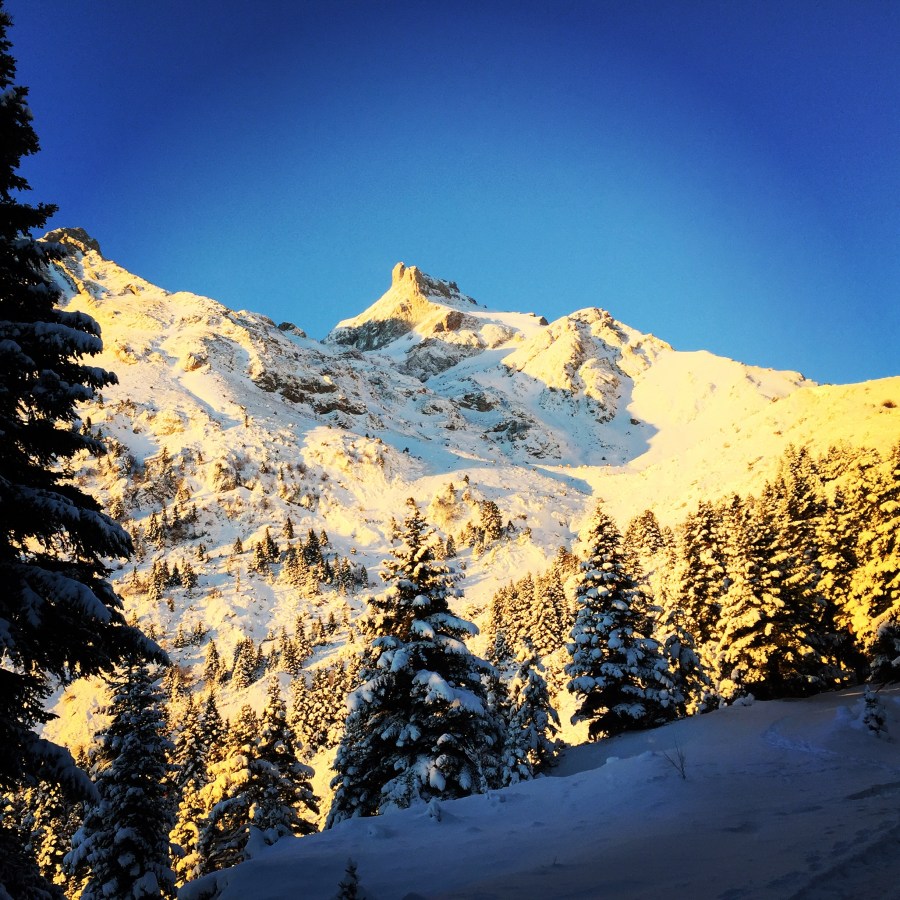
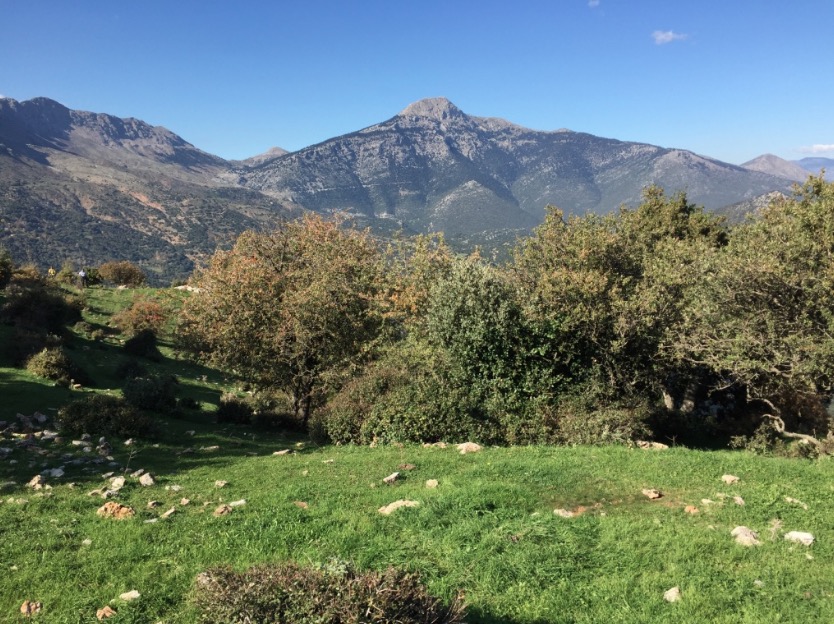
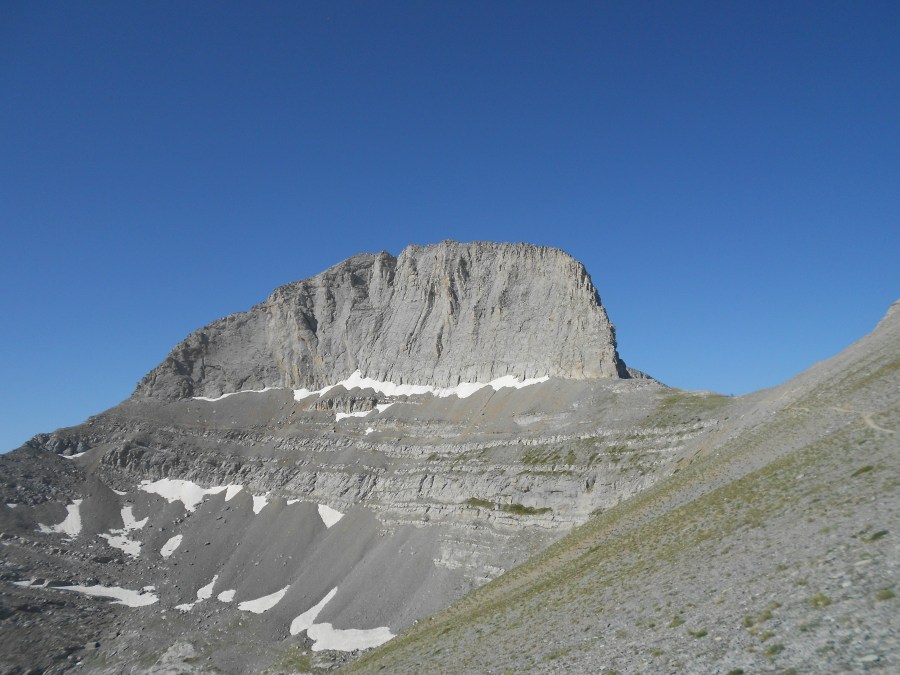
Artemisio mountain is on the border between Arcadia and Argolis, in the Municipalities of Argos-Mycenae and Tripolis respectively. It forms part of the mountain range that connects the Argolic Gulf with the Corinthian, and as such, it borders with Lyrkeio mountain on the north and with Ktenia mountain on the south. On its west is the plateau of Mantineia. Its tallest peak is 1,771 metres in height.

According to Pausanias, a sanctuary dedicated to goddess Artemis, patron of hunters and wild nature, used to sit on its peak. The Roman traveller mentions the sacred grove of Itamoi, a European Yew that is very toxic, and according to mythology, the goddess used it to poison her arrows; unfortunately, the grove has not survived. Today, very few fir trees survive. The river Inachos has its spring on the mountain, its mouth in the Argolic gulf, and is one of the few springs that can be used for those who decide to climb the mountain.

Continue reading “Artemisio Mountain”
Lake Doxa & Mount Pentelia (Dourdouvana)

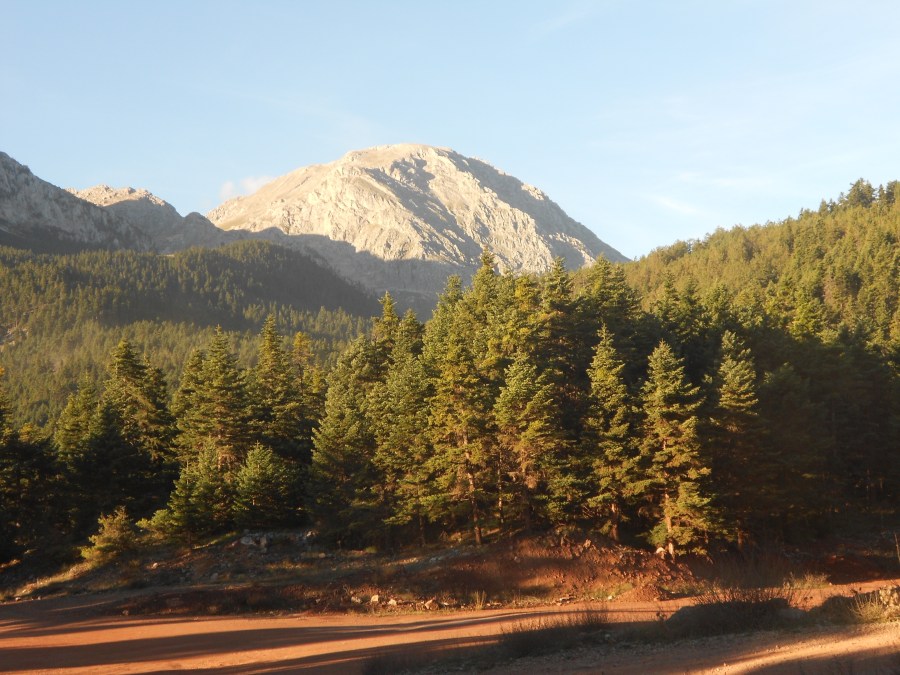
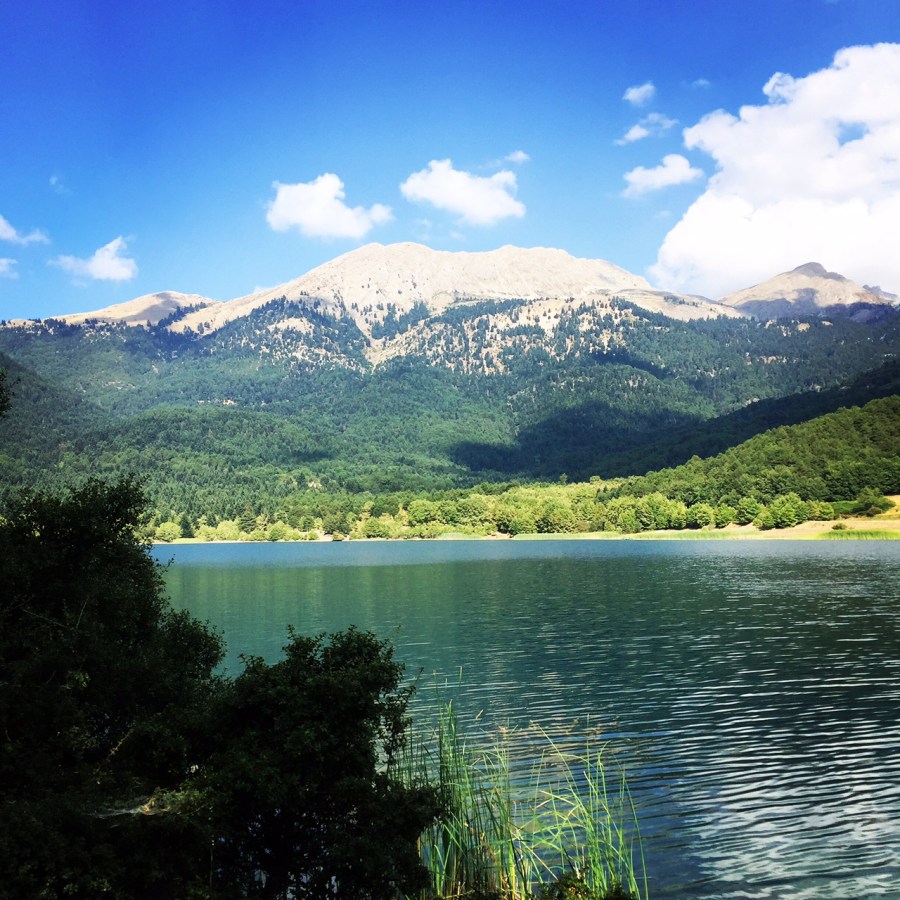
Lake Doxa is an artificial lake in western Corinthia, Greece. It is situated at an elevation of 900 m, in the municipal unit Feneos, near the village ancient Feneos. Construction was completed in the late 1990s. It is fed and drained by the small river Doxa, which empties into the plain of Feneos. In the heart of the lake on a small peninsula features a small church of Agios Fanourios. The Saint George Monastery in Feneos was relocated to higher ground, north of the lake. The lake is surrounded by pine forests.

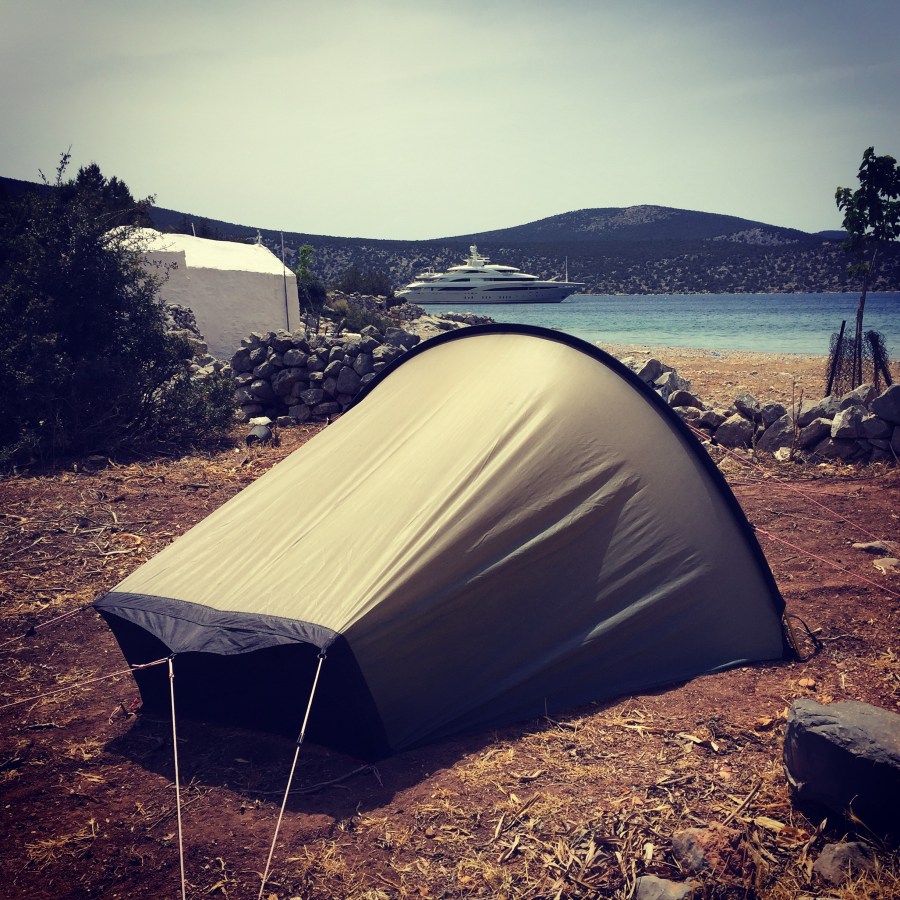
Early Saturday morning we have reached the Lake Doxa where we wanted to establish our camp. One option was to camp right next to the lake and another option was to set up our camp in the woods. We chose the latest option because we wanted to be more isolated. In summer time, lake dosa attracts many car-camping people from Poland, Romania etc.

Lake_Doxa_05
View from the Lake

Continue reading “Lake Doxa & Mount Pentelia (Dourdouvana)”

Erymanthos Mountain & River

Erymanthos is a mountain range in the southern part of Achaea and the northeastern part of Elis. With an elevation of 2,224 meters, it is the fourth-tallest mountain in the Peloponnese peninsula. The summit is located on the boundary of Achaea and Elis. Historically, Mount Erymanthos was part of northwestern Arcadia, where it was the second-tallest mountain range. The northern portion belonged to the historic Achaea.

We have arrived in the village of Kalenji very late on a Friday night. Our goal was to start on Saturday morning and cross the whole Erymanthos mountain range. Plan was to get up at 5.30 on Saturday morning and from Kalenji (South-West) to move towards the highest peak of Erymanthos, Olonos and to descent North East of the mountain. As first goal, we had the Profitis Ilias (Elias) peak something we have achieved in 4 hours from our starting point. The route was very rough and we had to walk and climb on rocks while we were carrying all our camping gear, food and several liters of water each one of us.

Continue reading “Erymanthos Mountain & River”

Lakmos Mountain (Pindos)

Lakmos is a mountain in eastern Ioannina and western Trikala regional units. The mountain is a part of the Pindus mountain range. Its highest peak is the Peristeri, at 2,295 m elevation. It stretches from the village Krapsi in the west to near Metsovo in the east, over a length of about 20 km (12 mi). The nearest mountains are the Athamanika to the south, the Lygkos to the north and the Mitsikeli to the west. It is drained by the river Arachthos and its tributaries to the north, west and south, and by the Acheloos to the east.

The nearest town is Metsovo, at its northeastern end. Other places in the mountains are Anthousa in the southeast, Anthochori in the north, Megali Gotista in the west and Vathypedo in the southwest.

Continue reading “Lakmos Mountain (Pindos)”

Winter Climb in Vardousia Mountain

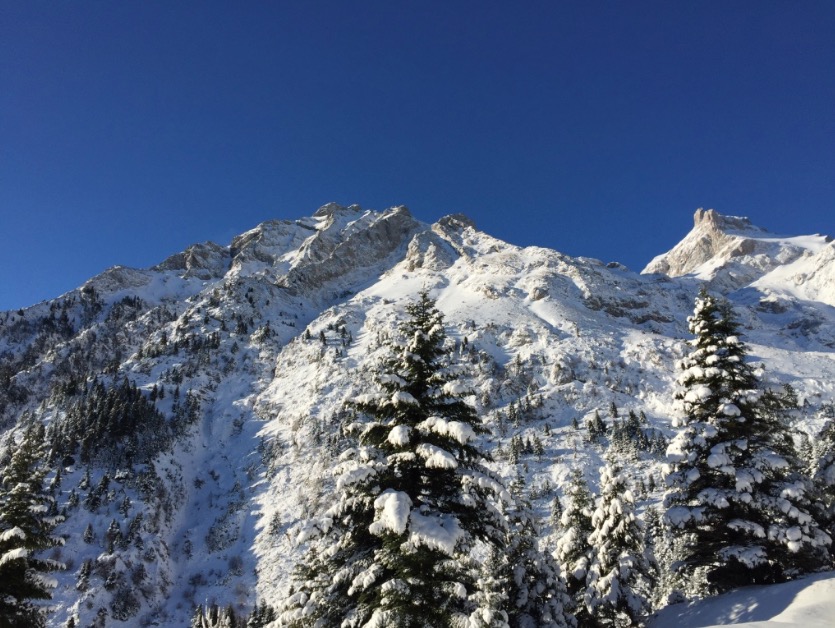
Vardousia is a mountain in northwestern Phocis and southwestern Phthiotis, Greece. Its highest peak, Korakas reaches 2,495 m (8,186 ft), making it the second-tallest summit in Central Greece after Giona. It is a southern extension of the Pindus mountains. It is divided into three main parts: Northern Vardousia, whose highest peak is Sinani at 2,059 metres (6,755 feet), the very steep Western Vardousia, whose highest peak is Soufles at 2,300 metres (7,500 feet), and Southern Vardousia, with the highest peak of Korakas. The whole range measures about 25 kilometres (16 miles) from north to south.

Last weekend, together with a group of friends we have been climbing towards the Korakas peak, starting from Athanasios Diakos village. The first part of the climb is more like trekking under beautiful trees and with wonderful views towards the Vardousia peaks.

Continue reading “Winter Climb in Vardousia Mountain”

Hilleberg Akto Review

When Hilleberg first introduced the Akto nearly 20 years ago, they didn’t know that it would become as popular as it has. Although only slightly heavier than a bivy bag, the Akto offers near-luxury, all-season shelter for the solo traveler – lodging that includes a vestibule and a packed size small enough to fit into a side pocket on many packs.

Boom 2016-06-30 at 15.32.01

Continue reading “Hilleberg Akto Review”

Ascent on Mount Kreion (Ktenias)

Kreion/Ktenias mountain, also named Chtenias, is on the border between the regions of Argolida and Arcadia. North of Ktenias is Artemisio, and south is Parnon. Its highest point is at 1,643 metres and second highest is the peak “Prophet Elias” at 1,589. The view from the mountain’s top is amazing, encompassing Parnon and Taygetus on the south, up to the plains of Argolida on the east, and the plateau of Tripolis is visible as well as Mainalo mountain on the west.

The mountain is found in ancient writing as Kreion mountain, possibly named after the Titan Crius (or Kreios, or Krios, the son of Uranus and Gaia) who was particularly worshipped in Peloponnese.

Boom 2016-06-30 at 11.39.00

Continue reading “Ascent on Mount Kreion (Ktenias)”

Ascent on Aselinon Mountain (Giona)

Mount Giona is a mountain in Phocis, Central Greece. It is located between the mountains of Parnassus to the east, Vardousia to the west, and Oeta to the north. Known in classical antiquity as the Aselinon Oros (‘moonless mountain’), it is the highest mountain south of Olympus and the fifth overall in Greece.

In the fall of 2014, we wanted to try to climb Mount Giona in central Greece. We have gathered a small group of three (3) and we started the long journey on the highway towards the base of the mountain. On our way to Giona, we have paseed Mount Parnassos and Mount Oeta (Iti, Oiti). We had to drive through provincial roads, through beautiful forests and the whole driving towards Aselinon mountain was great.

The first 2 hours we walked though gravel roads and hiking trails, though the woods and on beautiful valleys. Suddenly, we looked up in the sky and we have seen Pyramida, the highest peak of Aselinon mountain at 2,510 metres. The fact that we could now see our destination gave us strength and extra motivation.

Continue reading “Ascent on Aselinon Mountain (Giona)”

Olympus Mountain Summer Ascent

On the list of iconic mountains of the world, Mount Olympus surely has a place.  Not only is it a geographically impressive peak, rising straight from the Aegean Sea to a height of 2,917 m, but it’s also one of great mythological importance.  Eleven of the twelve major Greek gods resided in the gorges of the mountain, while Zeus himself claimed Stefani peak for his throne.  The gods would come together on the highest summit, Mytikas, to determine the fate of the mortals they ruled.

The first known ascent of Olympus was in 1913.  Today, an estimated 10,000 people climb the peak annually, though far fewer attain the ultimate summit of Mytikas. Despite the popularity of the mountain, I had a hard time finding information about climbing Olympus.  The best info is at the website for one of the refuges, but it only covers the trail that passes by that refuge.

Continue reading “Olympus Mountain Summer Ascent”